Kruger National Park for First-Timers: Gates, Fees, Camps and Rules
A first-timer's guide to Kruger National Park: which gate to use, 2026/27 conservation fees, rest camps, self-drive rules, malaria and the best time to go.
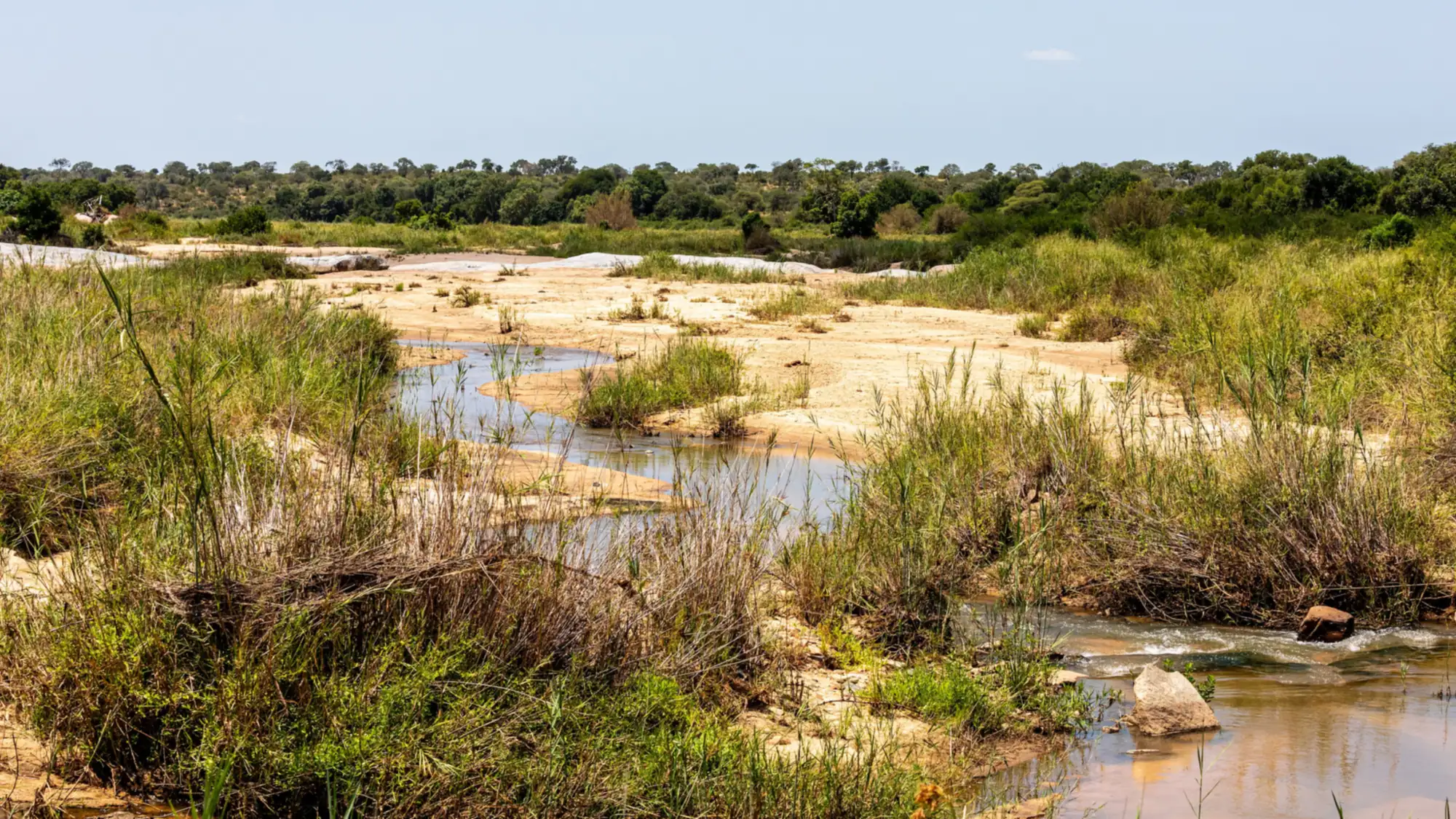
Kruger National Park is one of Africa's great wildlife reserves and, unusually, one you can explore in your own car. It covers close to 2 million hectares across Limpopo and Mpumalanga, about 350 km from north to south, and is home to lion, leopard, elephant, buffalo and rhino along with hundreds of bird species. It is run by South African National Parks (SANParks).
For a first visit, the size and the rules can feel daunting. This guide covers which gate to use, the 2026/27 conservation fees, how the rest camps work, the self-drive rules you must follow, malaria precautions and the best time to go. Prices and gate times change, so always confirm on sanparks.org before you travel.
Getting there and choosing a gate
Kruger has around ten entrance gates. Which you choose depends on where you are coming from and what part of the park you want to see.
| Region | Main gates | Good for |
|---|---|---|
| South | Malelane, Crocodile Bridge, Numbi, Phabeni, Paul Kruger (near Skukuza) | First-timers, shortest drive from Johannesburg, densest game viewing |
| Central | Orpen, Phalaborwa | Open plains around Satara, big cats, fewer cars |
| North | Punda Maria, Pafuri | Remote landscapes, baobabs, birding, quieter camps |
From Johannesburg, the southern gates are roughly a four to five hour drive via the N4 through Mpumalanga. Kruger Mpumalanga International Airport near Mbombela, and smaller airports at Skukuza, Hoedspruit and Phalaborwa, make fly-in trips possible. See our Mpumalanga and Limpopo guides for the surrounding towns.
Gate quotas and times
SANParks limits the number of day visitors and vehicles entering at each gate, especially during school holidays and long weekends. If you are a day visitor, book your entry in advance through SANParks, or arrive early.
Gates and camp gates open and close at fixed times that change with the season. In summer, gates typically open at 05:30 and close at 18:30; in mid-winter the hours are shorter. You must be inside a camp or out of the park by closing time, and arriving late can earn you a fine. Plan your drives with plenty of margin, because the speed limits make distances slow.
Conservation fees for 2026/27
Everyone entering the park pays a daily conservation fee per person, unless they hold a valid Wild Card. SANParks sets new fees each year from 1 November. As reported for the period 1 November 2026 to 31 October 2027:
| Visitor | Adult per day | Child per day (2 to 11) |
|---|---|---|
| South African citizens and residents (with valid ID) | R140 | R70 |
| SADC nationals (with passport) | R296 | Lower child rate applies |
| International visitors | R692 | R345 |
Some SADC nationals pay the South African rate under transfrontier park agreements, for example Mozambicans and Zimbabweans visiting Kruger. Fees are per day, so a five-day trip for two international adults adds up quickly, close to R7,000 in fees alone. Check the official rate card on the SANParks website before you go, as SANParks can change fees at short notice. Use our currency converter to see the cost in your own currency.
The Wild Card
The SANParks Wild Card is an annual loyalty programme that covers daily conservation fees at participating parks for 365 days. South African residents can choose cheaper regional clusters, while international visitors buy the International All Parks Cluster. For 2025/26, the international card was priced at R4,680 for an individual, R7,310 for a couple and R8,745 for a family. New prices take effect each year, so confirm the current rate. For a foreign visitor spending a week or more in Kruger, or visiting several parks, it often pays for itself.
Rest camps and where to stay
SANParks runs a network of fenced rest camps across the park, ranging from large camps with shops, restaurants, fuel and swimming pools to small bushveld camps with no facilities at all.
- Main rest camps such as Skukuza, Lower Sabie, Satara, Olifants, Letaba, Shingwedzi and Berg-en-Dal offer cottages, bungalows, safari tents and camping.
- Bushveld camps are smaller and quieter, open only to guests staying there, with no shop or restaurant.
- Satellite camps and private concessions range from simple to luxurious. Private lodges in Kruger and the neighbouring Greater Kruger reserves, such as Sabi Sand, include guided drives in open vehicles.
Popular camps are fully booked months ahead for school holidays and long weekends. Book through the SANParks reservation system as early as you can. Fuel, basic groceries and ATMs are available at the main camps, but bring medication and anything specialised with you.
Self-drive rules you must follow
The rules exist to protect you and the animals, and rangers do enforce them.
- Stay in your vehicle except at designated, fenced or marked areas such as camps, picnic sites and hides. Lions and leopards can be hidden metres from the road.
- Keep to the speed limits: 50 km/h on tar roads and 40 km/h on gravel roads. Speed cameras are in use.
- Do not feed or disturb animals. Feeding baboons and monkeys makes them dangerous and often leads to them being put down.
- Stay on designated roads. Off-road driving is prohibited, as is entering roads marked "No Entry".
- Never drive outside gate hours.
- Give elephants space and right of way. If an elephant shows signs of agitation, such as ears spread wide or head shaking, back away slowly and give it room.
- No litter, no loud music, and do not hang out of windows or sit on the roof.
- Drones are not allowed without specific SANParks permission.
Read our driving and transport guide if you are renting a car in South Africa for the first time.
Malaria and health
Kruger is in a malaria area. The risk is generally higher during the hot, rainy months, roughly October or November to May, and lower in the dry winter. Before you go:
- See a doctor or travel clinic for advice on whether to take preventive medication. The right choice depends on your health, the season and where you are staying.
- Use insect repellent, especially from dusk to dawn, and wear long sleeves and trousers in the evenings.
- Sleep under a net or in a room with screens or air conditioning.
- If you develop fever or flu-like symptoms within a few weeks of your trip, see a doctor urgently and tell them you were in a malaria area.
Kruger summers are very hot, so carry water. See our healthcare and medical aid guide for medical cover in South Africa.
Best time to visit
| Season | What to expect |
|---|---|
| Dry winter (May to September) | Thin bush and animals gathering at water make game viewing easiest. Cool mornings, mild days. Lower malaria risk. |
| Spring (September to October) | Very good game viewing as water becomes scarce. Hot by October. |
| Wet summer (November to April) | Green and beautiful, baby animals and migrant birds. Thicker bush, hot, humid, afternoon storms and higher malaria risk. |
School holidays and long weekends are the busiest times. Check our public holidays page and plan quieter dates around them.
Tips for a first visit
- Go early and late. Animals are most active at dawn and dusk. Leave camp when the gates open.
- Buy a map and use the sightings boards in camps, where visitors mark recent sightings.
- Be patient. Park at a waterhole for half an hour rather than racing between roads.
- Book a guided activity. Sunrise, sunset and night drives with SANParks rangers show you a side of the park you cannot see alone, and night drives are the only way to be on the roads after dark.
- Bring binoculars for everyone in the car.
Frequently asked questions
Can I drive through Kruger in a normal car?
Yes. Most main routes are tarred and the gravel roads are generally fine for a regular sedan in dry weather. Take care after heavy rain.
How much is the Kruger conservation fee in 2026?
As reported from 1 November 2026, adult daily fees are R140 for South African residents, R296 for SADC nationals and R692 for international visitors. Confirm on the SANParks website before you go.
Do I need malaria tablets for Kruger?
Kruger is in a malaria area, especially in the wet summer months. Speak to a doctor or travel clinic before your trip about preventive medication, and use repellent and nets.
How many days do I need in Kruger?
Three to four nights is a good first visit to the southern section. A week lets you explore further north.
Is a Wild Card worth it for foreign visitors?
Often, if you are spending around a week in Kruger or visiting several parks in a year. Compare the card price with your total daily fees.
Written by Daleel ZA editorial team. Daleel ZA is a guide, not legal, financial or immigration advice. Rules change; confirm with the authority named before you act.